Wednesday, September 21, 2011

Halitosis (Bad Breath) Causes and Treatments

Is My Dog's Breath Supposed To Stink?
 by: Brigitte Synesael


<><><><>
<>
<><><><>

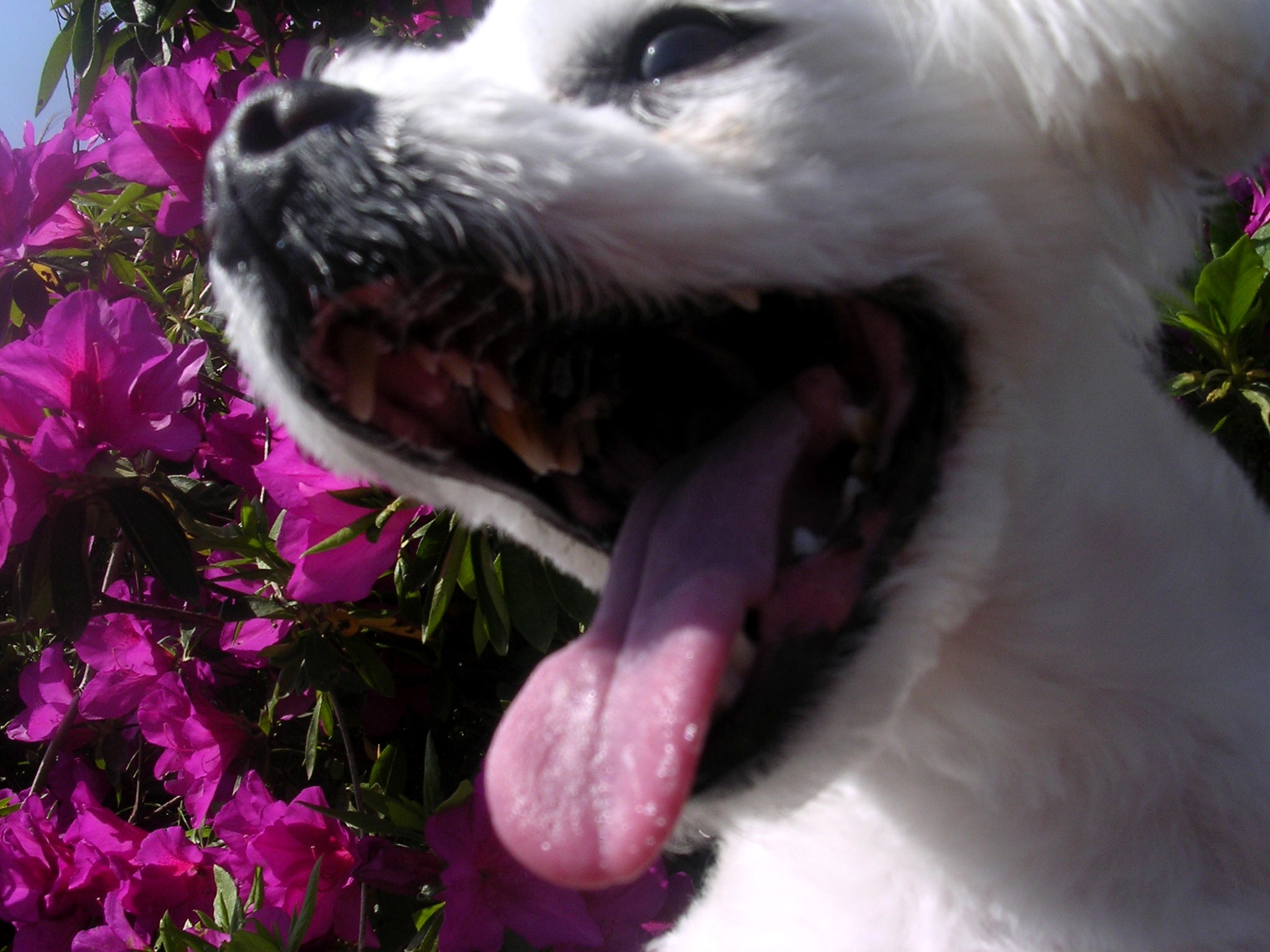
File:Dog's Joy.jpg


Well, I wouldn't expect any dog to have "minty fresh" breath, but it shouldn't smell so bad that you can't be near your canine friend. There could be several reasons for your dogs' bad breath including a broken, decayed or abscessed tooth, mouth tumors, periodontal disease, gingivitis, diabetes, sinus infections, and inflammation of the gums, kidney disease, and gastrointestinal problems. This is not an exhaustive list, but you can clearly see that it's not as simple as "fixing your dogs' bad breath". You'll have to become a bit of a detective. We'll start with some trial and error.

If the bad breath is temporary, then it's quite likely just something your dog has consumed. Pay attention to what your dog eats (and gets in to). Some canned food will result in foul smelling breath. Raw meat can have the same results. A naughty dog that dines on the garbage regularly will also cause bad breath. If any of these are possibilities, then I suggest you find a way to keep you pooch out of the garbage and/or change his/her dog food to see if that makes a difference. If it is just bad breath from something your favourite friend has eaten, you can squeeze a drop or two of lemon into his water.

If you've ruled out anything consumed, it's time to consider a possible health issue. The most common cause of foul breath in your canine is periodontal disease. Just like people, food particles get stuck in between your dogs' teeth. Decomposed food causes bacteria and this combination results in plaque. This is no different than in humans. Plaque appears as a yellowish, brownish film on the dog's teeth. As with humans, untreated plaque will develop gingivitis and will ultimately progress into periodontal disease. All dogs need their teeth brushed. Brushing their teeth is the best way to proactively prevent this health issue and it is also one of the best ways to resolve it while it's in the early stages.

You can purchase toothbrushes especially for dogs, or you can use a soft bristle toothbrush. You may also want to consider a finger brush; a rubber cap with rubber bristles that goes over your finger. Some dogs aren't comfortable with the toothbrush and you may have better luck with the finger brush. If you start brushing your dogs' teeth when he/she is a puppy, there shouldn't be any problems with it as an adult dog. Even if you're starting with an older dog start by letting him/her sniff and lick the toothpaste. Make this a positive experience. Lots of praise and be very gentle. You may not get all the teeth brushed the first time. It's more important for both of you to have fun with it.

As for toothpaste... do not use people toothpaste. It shouldn't be swallowed and dogs don't like the taste. You can buy toothpaste for dogs or make your own.

Mix:

6 tsps. baking soda

2 dashes of salt

4 tsp. glycerine

2 tsps. either beef or chicken broth

You can try 2 tsps. of peppermint extract for the "minty fresh" breath, but no guarantee that you dog will like it. If there is evidence of swelling of the gums or gingivitis, adding a little crushed sage may help with the swelling.

It's important that you provide your pet with chewing opportunities. Dental chews can be purchased and will help to prevent tartar and plaque build-up. Bones, rawhide, dried pig's ears etc. are a great way to avoid plaque build-up. Be careful of the bones you choose; heavy shin and shank bones are best. Do NOT give your dog chicken bones. You can also take your dog into the Vet on a regular basis for a thorough teeth cleaning. It's also possible that there is an abscessed or decayed tooth that may need to be extracted. The only solution to this is a visit to the Vet. In fact, as we have already discussed, there are several health issues that could be the cause of your dogs' bad breath. Each of these would have to be diagnosed and treated by your Vet. During this time you should keep a close eye on your pet for anything out of the ordinary. Watch for symptoms like abnormal drooling, blood or other discharge from the mouth. Is your pet sneezing or is there a discharge coming from his nose? Is he pawing at his mouth? Is he having difficulty eating or not wanting to eat? Do you notice any swelling in his face?

Also check out what's happening at the rear. Is your dog constipated or does he have diarrhea? Is he passing gas? Bad odour from both ends... big trouble! Is he scratching himself? Does he eat grass but not his food? Is he vomiting? Anything you notice should be brought to the attention of his Vet.

The important thing is to remember is that there could very well be a serious health issue involved, and your dog doesn't have any other way to tell you or to ask for your help. If your pets' bad breath is not resolved, take him to his Vet.

Remember to hug your pet today.

Brigitte Synesael

Allergies in Dogs

Allergies In Dogs - What Can I Do About Dog Allergies Symptoms?
 by: Aster Brittan


File:Dogs nose.jpg


It is suggested that if you are looking for permanent relief for dog allergies symptoms you need to go see a veterinary dermatologist. Here you can find the cause for sneezing in dogs, general allergies in dogs and most of your dog skin problems.

People medicines such as Benadryl and Claritin will only provide temporary relief of the signs and your dog will still be uncomfortable.

In some cases the dermatologist may be able to make up allergy shots if they find out the cause of your dogs allergies. You should not make any diet changes or treat your pet with any medication without strict guidance from a veterinarian.

Changing the dog's diet without the guidance from a veterinarian can make it more difficult for them to isolate the cause of the allergies. It’s entirely possible that the causes may involve specific foods. This requires an extensive food trial. However it could be environmental agents that are causing your dog allergies symptoms which would require further allergy testing.

On your own you could try hydroxizine or atarax for some relief. Do Not use prednisone, it is not the greatest it's a steroid and have several side effects. You can also try eliminating the normal protein source with another protein like fish or venison. It takes up to 2 to 3 months of a diet change to tell if there is any effect.

Allergic contact dermatitis usually shows up in dogs as a hypersensitivity reaction to particular molecules in your pet's environment. Irritant contact dermatitis happens when the skin is exposed to noxious substances in the environment. The symptoms and biologic mechanisms in these two disease structures are closely similar and are often discussed together.

Allergic contact dermatitis is a rare disease, which occurs when an animal's skin overreacts to certain small molecules in the environment. Substances, which can cause allergic contact dermatitis in dogs include some antibiotics applied to the skin, metals such as nickel, materials like rubber or wool and chemicals such as dyes and carpet deodorizers.

Irritant contact dermatitis occurs when the dog’s skin is exposed to intensely irritating chemicals like the sap in poison ivy or road salt.

What are the symptoms of allergic and irritant contact dermatitis?

Lesions occur on the areas of skin that are sparsely haired and exposed to the offending cause. Areas like the back of the paws, abdomen, muzzle, and lips.

The affected areas are usually very red, have small bumps or blister-like lesions, and itch like crazy. Also in irritant contact dermatitis may occur.

The key to managing these dog allergies symptoms is the obvious removing or restricting of exposure to any allergen or contact irritant in the pet's environment. If your not able to do this, then using fatty acids, antihistamines, biotin, and topical shampoos can at least control the itching.

As a rule, for any pet suspected of having an allergy problem that could include an allergic contact component, we recommend:

Glass or stainless steel food and water bowls, cleaned and rinsed well daily

Hypoallergenic detergents for the pet's bedding

Routine hypoallergenic shampoos for the pet to remove any allergens

Restricting walking to sidewalks or paved surfaces-completely avoiding the grass,

if possible.

Be kind to your pooch!

Hopefully in the not to distant future there will be an easier fix for all allergies in dogs.

Tuesday, February 8, 2011

How Old Is Your Dog In Human Years?

File:Lhasa-apso-rolly.jpg

Dog Years Human Years

Author: Dog Care Tips

The life expectancy of any dog is commonly expressed in terms of dog years by us and it depends entirely on the dog's breed, size as well as the dog's surroundings. Various other factors affect the life expectancy of a dog. A dog's life span changes according to the diet provided to him and also by the number of medical problems the dog tends to face over the years.

The average life span of the small dog like Chihuahua is about 15 to 16 years, while medium sized the dogs like Border Collies have a life span of 10 to 13 years. It can be noticed big dogs like Great Dean live up to only 7 to 8 years. The calculation of the life expectancy of particular dog can be accurately done with the help of "size or the specific breed calculator", which is said to be one of the most accurate age measurement schemes available. The size or specific breed calculator gives approximate results about the dog's predictable lifespan based on the size as well as the breed of the dog.

It is generally assumed that, on an average, "one human year equals to seven dog years". This statement may not be appropriate, since the first two years are jointly represented by 18-25 years in such schemes and because the entire ratio cannot be generalized for all the dogs though, they belong to different sizes and breeds. An exact ratio of dog years vs. human year cannot be formulated. However, some obvious features remain similar between both aging humans and dogs.

It is generally assumed that the human equivalent of a one-year dog is supposedly fully grown by both mental and physical aspects. Dogs like humans tend to develop advance muscular features as they grow along with a similar mental development. Through a major dog study, it has been estimated for dogs of all breeds and sizes that, nearly "64 percent of dogs" were euthanized because they were affected with some kind of diseases. Only 8 percent of the total dogs live beyond 15 years and nearly 16 percent of them die yearly due heart diseases and cancer. Human lives are not terminated even if they suffer from rare and incurable diseases; and this is the main reason why the lifespan of an average human being is reasonably long.

The effects of aging in dogs is said to be dormant for several years. But like humans, dogs to undergo physical changes as well. The first sign of aging in dogs is said to be the decrease in its activity levels. The sleeping period in these dogs also becomes longer. The canines experience a drastic change in their skin condition, limb usage, appetite and they experience tooth loss as well. Their sense of hearing and vision also diminishes gradually. Older dogs tend to experience stiffness in their body. All these obvious signs of aging can even be found in humans. The human years are extended only because of advance modern medicine and various other drugs that are designed to deal with symptoms of old age.

Dogs and humans may not have the same physiology, yet some obvious similarities can be noticed when both species age. Dog years and Human years may not be directly related by some advance equation, but to the naked eye the equivalence of corresponding features of Dog years and Human years are quite visible.
Article Source: http://www.articlesbase.com/pets-articles/dog-years-human-years-301243.html

About the Author

Now that you know dogs grow old faster than we do, learn how to care for your dogs the best you can and give them a good life. They deserve it. Learn more at: http://www.2knowabout.com/dog/how_to_care_for_a_dog_with_a_broken_leg.php

Wednesday, January 26, 2011

The Causes of Bad Breath (Halitosis) in Dogs


File:Chihuahuabland.jpg

If your dog has bad breath (halitosis) it is reason for concern. Not only is the odor unappealing, but it may also be a sign of an underlying problem. There are a variety of conditions that cause bad breath in dogs that warrant investigation. The solution may be simply providing effective dental care or perhaps, more seriously, an underlying gastrointestinal problem.
What Causes Bad Breath?
In most cases bad breath (halitosis) in dogs is caused by  gum or dental disease. Small dogs are especially prone to dental problems such as tarter and plaque buildup warranting special attention to these areas.  If after proper dental attention the problem does not resolve, further investigation is needed. Bad breath results from the accumulation of bacteria most often in the mouth, but may also occur in the lungs, liver, kidneys, and gastrointestinal tract. A serious underlying problem may be present which requires prompt medical investigation and treatment. If your dog’s bad breath is persistent he or she should be taking to a veterinarian for examination and testing.
Treatments for Bad Breath in Dogs
Oral Care
Daily oral care is needed to prevent plaque and tarter buildup. There are many great, natural products on the market, such as Leba III Dog Dental Spray and Triple Pet All Natural Toothpaste(Only use toothpaste formulated for dogs as human formulas may upset  his stomach) that provide for optimal, natural oral care. There are also brushless, chewable toothpaste's available such as Ark Naturals Breath-Less Brushless Toothpaste S/M. Your dog may require a specialized cleaning by a professional if all methods still result in continuing tarter and plaque buildup.
Change of Food
If your dog’s diet is contributing to halitosis, change his diet to easily digestible food that is of high-quality
Chew Toys
Make available chew toys, such as Terrabone Dog Treat Fresh Breath Regular Value Pack, that naturally clean tarter and plaque from your dog’s teeth.
Signs of Concern
Observe your dog’s drinking habits. If he has been drinking more than usual and urinating frequently, accompanied by fruity, sweet smelling breath, this may be a sign of diabetes.
An indication of kidney disease is breath that smells of urine
Foul breath accompanied by yellowed whites of the eye, vomiting, decreased appetite could indicate a problem with the liver.


Featured Products


Monday, January 10, 2011

Fearful Dog - Dog at the Vet


By Rena Murray
 
Many a proud and assertive dog suddenly melts into jelly as a fearful dog when you take him to that dreaded appointment -- dog at the vet! Just as children (and adults) dislike or fear going to the doctor's office, there is much dog fear of vet. Yours does not have to be a generally fearful dog, simply one who feels threatened by the cool efficiency of all these strangers who hustle around in this cold, sterile place with so many scents of fear!... and especially if a dog muzzle is unceremoniously shoved over the dog's face!
My rescued Border Collie is obediently, but he certainly does not love it at the vet, and is quite eager to return to the car. Most people just rush in there, get the thing done, then get out... and that is scary for a dog! I always prepare my dog in advance.
So before you go, first check your own attitude. Come in feeling good, exuding confidence and a carefree attitude of "business as usual, no big deal." That will calm and reassure your dog.
But he, too, must come in feeling good. Give him fun outings, so going to the car to this place is just another of your outings to him. Make sure he is relaxed even before getting in the car by giving him proper exercise -- such as running him on a bike or roller blading. Make sure he has had a bowel movement if at all possible, because you want him comfortable.
Then you need to address the situation at the vet's office itself. One of the reasons dogs do not often like to go to the vet is because the veterinarian is always in a rush... and so are the staff. That can feel threatening.
Every dog (especially a fearful dog) should be allowed time to become familiar with the scent of the veterinarian, staff, and vet environment. He needs some positive time with them in advance of exam time if at all possible. Try to introduce him in a fun way and give him time to adjust to the vet and staff before you actually take him there for an official visit and exam. Just knowing them in advance will provide reassurance to ease your dog's fears... even if they are then moving quickly and efficiently in "work mode" (just as you might do during your own work day, so even that might be familiar to the dog).
If your dog is extremely fearful and requires a dog muzzle, take your time in introducing one. Introduce it on a day prior to the vet appointment, at some place else where the dog is not so stressed and is having fun. Take your time introducing the dog muzzle. It may take thirty minutes, but it is worth it to make the fearful one surrender to the muzzle. This way, she will not fear it any more and will see that it means no harm. Then when vet appointment time comes, go early and, by advance arrangement with the staff, start on this process at a calm, leisurely pace -- not the frenetic pace of a normal in-and-out, get-it-done, office visit.
Cannot get a dog muzzle on? Here are two important dog behavior tips.
1. Get an obedience dog trainer with muzzle experience to help in advance of the vet visit or to go with you. Have the professional restrain the dog while she releases her frustration -- by holding the scruff of the dog's neck, or the loose skin on the sides of her neck under her jaw. A skittish dog often screams the first time this procedure is done, so do not panic if such occurs. (That is all the more reason to acclimate her to the dog muzzle in advance.)
2. Remember to make your dog face his or her fear. The more you give in to her fear displays, the worse it will be. Never let the dog go when she is nervous, as that is when most dog bites occur. Fear bites. They can be nasty. So just stay in your control position until your dog calms down and you accomplish your goal.
It is the same thing always in dog training and dog relationships. Fearful dog or not, YOU must be a firm, consistent, persistent Leader. Never let go when the dog throws a tantrum (or you will be bitten), and always maintain your position until the dog is calm. The dog must see that you will not be the "first to look away" (hence, lose), but that you remain immovable until you accomplish your goal. Such leadership will comfort, reassure, and restore your fearful dog more than anything else -- even at the vet!

About the Author:
Fearful Dog Problem? Ask Rena Murray at http://www.pawpersuasion.com/contact.php for Coaching! This Dog Behaviorist-Obedience Dog Trainer blends best of the Dog Whisper Behavior and other methods in no-nonsense Articles and FREE Newsletter at www.PawPersuasion.com . Suspect a medical problem? Get expert Veterinarian insight - http://www.pawpersuasion.com/health.php

Nutrition For Dogs - Dog Food Ingredients

By Gary Neale
 
First we need to recognize that nutrients are not the same thing as ingredients. It's not the combination of ingredients that determines the quality of your dog's diet and whether or not the dog's nutritional needs are being met, it's the blend of nutrients. The ingredients in dog food only have to do with digestibility and palatability. A given dog food can contain certain ingredients that have no nutritional value or that can't be digested by your dog. You can find two different dog foods that may both seem to nutritious, but one may have ingredients that are better for your specific breed of dog. You should discuss your dog's nutritional requirements with your vet in order to select a diet that provides everything needed.
Healthy feeding habits should start as soon as you bring your dog home! Your dog's diet influences such things as health status, appearance, development and attitude. The way you feed your dog will affect certain behavioral aspects like, potty training and begging. When your dog is a puppy, it is very important to prevent it from gaining a lot of weight, which may contribute to the likelihood of obesity and its related health problems as they age.
Since dogs come in all sizes and shapes, there are specific foods available that you should consider depending upon if it's a small breed, large breed, puppy or adult. The nutritional needs of dogs will change as they age depending on how active they are. For instance, small dogs tend to require more calories per pound than larger dogs and thus need a dog food that provides a lot of energy.
As of late, many dog owners have become seriously concerned about the safety of commercial pet food. With all the recent pet food recalls, many more dog owners are starting to prepare their own nutritious dog foods. There is more than a little concern about how poorly regulated the pet food industry is concerning preservatives. Commercial dog food makers add all kinds of chemicals to keep their foods from deteriorating while setting on the grocery store shelves. The Association of American Feed Control Officials (AAFCO) Official Publications lists 35 known preservatives being used by commercial dog food companies. Some of these have no restriction on amount that can be added to your dog's food. Chemicals such as Butylated Hydroxyanisole and Ethoxyquin have controversial safety reputations at best.
Many of the commercial dog food formulations contain meat and bone meal, which has been shown to contain the remains of euthanized cats and dogs. These dead animal bodies are sent to rendering plants, along with road kill and dead live stock. At the plants they are boiled down to get the fat, which is sold to dog food manufacturers as "animal fat." The leftover animal parts are dried, crushed and sold to the same manufacturers as "meat and bone meal." Knowing this, many dog owners have put their pets a on raw diet or started making their own homemade dog food.
Those who advocate raw diets say it is the most natural because canines in the wild are carnivores and have survived and thrived for millions of years. They indicate that ever since commercial dog food appeared on the scene about 60 years ago, the increase in dysplasia, allergies and other health conditions in dogs has increased dramatically. However, proponents of homemade dog food say that dogs are actually omnivores and they need the nutritional benefits of grain. They intimate that dog owners who use only raw food are depriving their dogs of valuable nutrients. In addition, with homemade foods you can be creative while making your own healthy dog food. Proponents of homemade food report the activity as a fun way to feel even closer to their dogs. Especially if they really like what you make. And the debate goes on.

About the Author:
Garry Neale is and avid dog enthusiast and creator of the popular e-book, "The Dog Lovers Guide", a FREE dog owners handbook you can download at no cost from his Dog Lover Website.